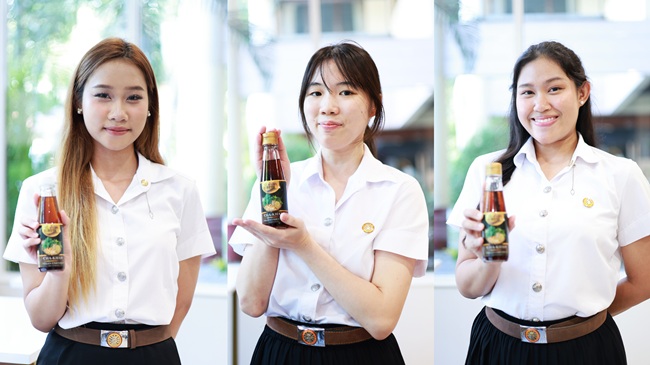
Thammasat Students Win Asian Food Innovation with "Chakram Fish Sauce"
Thammasat Students Win Fi Asia Startup Innovation Challenge for Food Ingredient Product
Tuesday 7 October 2025
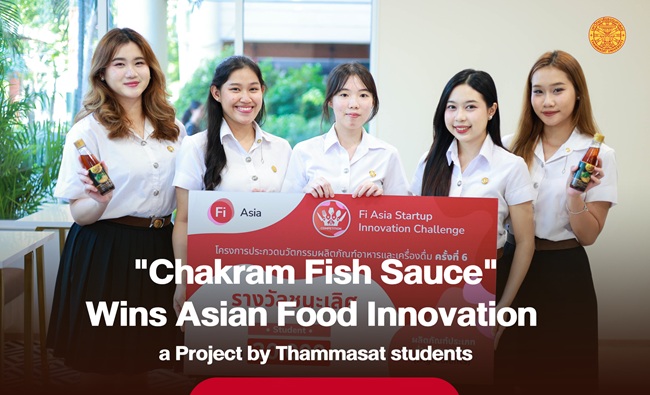
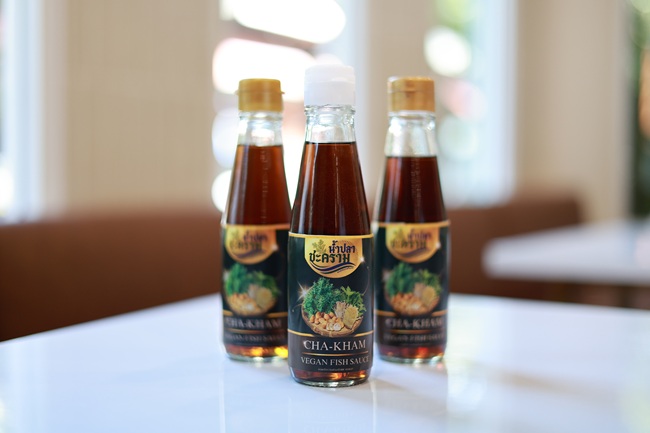
Thammasat University students from the Faculty of Science and Technology transformed "Chakram" into "Chakram Fish Sauce," a food innovation that redefines "saltiness." This creative addition of value to a local Thai plant earned them first prize in the 6th Food and Beverage Product Innovation Contest, 'Fi Asia Startup Innovation Challenge,' in the Food Ingredients category.
The team members are Jiratchaya Rattanabansakul, Yanisa Sripim, Piyathida Kaewsaklek, Srigorn Rodjanasaroch, and Kanokwan Eakbut, third-year students in the Food Science and Innovation (FIN) program. The advisors are Asst. Prof. Dr. Suteera Vatthanakul and Asst. Prof. Dr. Pumnat Chuenchomrat.
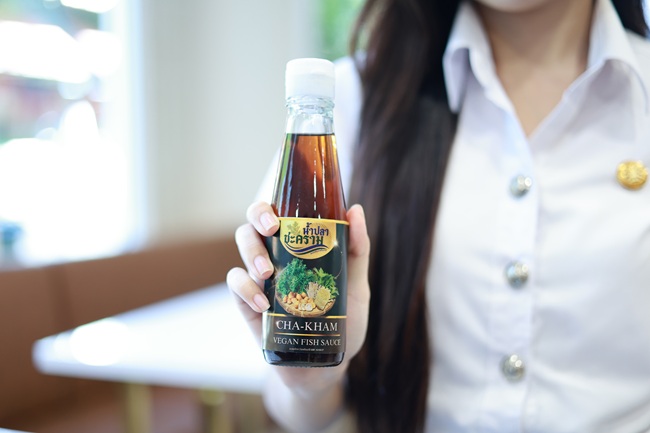
During the course Development of Innovative Food Products (FIN 331) focusing on creating products from local raw materials, the team decided to develop "Chakram Soy Sauce." Chakram's natural saltiness, which often makes it difficult to use in cooking and is seen as a weed in salt fields, could be utilized beneficially. Team members, having consumed Chakram since childhood, recognized its declining popularity due to its saltiness, sparking the idea to transform this challenge into a product.
100% local plant-based fish sauce, a new product that makes a difference.
'Chakram Fish Sauce' is a unique, plant-based seasoning, free of fish or soy. Made from local Thai plants, it's rich in nutrients, offers 3g protein, low sodium (18g/tbsp), and antioxidants, making it ideal for health-conscious individuals and vegetarians. Developed using food processing principles (FIN 341), the team sterilized ingredients at precise temperatures to achieve a color, aroma, and flavor similar to traditional fish sauce. They also utilized the Retort process for essential compound extraction. The main challenge was balancing ingredients to mimic fish sauce taste, achieved through heat and pressure extraction (Retort) and flavor adjustments, resulting in a seaweed-derived "fish sauce."
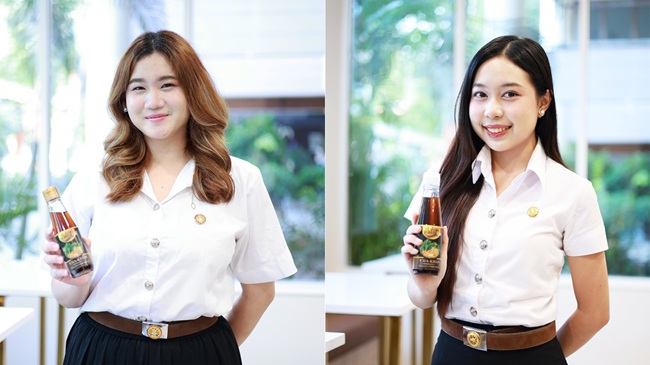
Soft skills like communication, presentation, and active listening were crucial for adapting, managing conflicts, and collaborating effectively in real-world scenarios. Hard skills involved applying knowledge from Analytical Chemistry in Food (FIN361), Sensory Evaluation (FIN333), and Food Microbiology (NO.221) to analyze product quality, improve flavors, and match market standards.
The term 'value' is significant because the work provides team members with knowledge value derived from learning and practical experimentation of the ideas into tangible outcomes. Additionally, it brings innovation value through the creation of distinct new products that address nutritional and health needs, reflecting the creative use of local resources. Furthermore, it contributes social and environmental value by utilizing local materials such as indigo, transforming underappreciated plants into future food innovations. This also generates economic added value that can be commercially developed.