
AI Overuse Threatens Students’ Job Readiness and Essential Skills
AI Overuse Threatens Students’ Job Readiness and Essential Skills
Monday 17 November 2025
Thammasat University's Vice Rector for Academic Affairs is concerned that students' over-reliance on AI is hindering the development of vital skills, critical thinking, analysis, communication, and specialized knowledge, putting their future employability at risk. He stresses that unethical and improper AI use severely impedes learning.
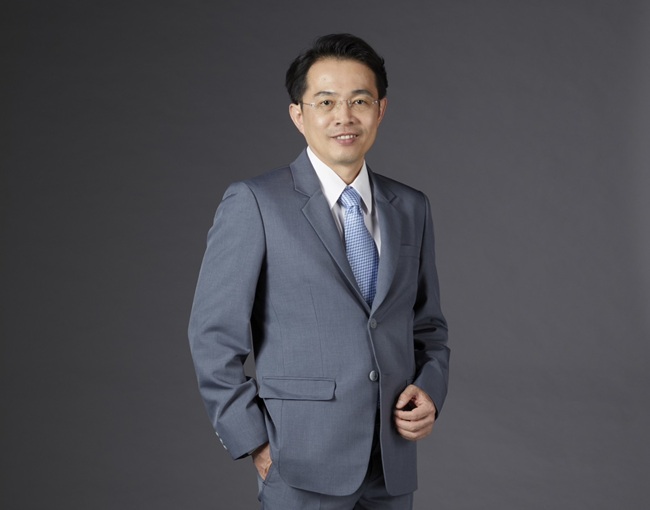
Assoc. Prof. Dr. Dumrong Adunyarittigun, Vice Rector for Academic Affairs at Thammasat University, revealed the inappropriate use of artificial intelligence (AI) by current students, which has led to issues regarding a lack of learning skills. Excessive student reliance on AI for academic work, like homework or exams, raises ethical concerns and hinders the development of crucial critical thinking and analytical skills. This inappropriate use impedes skill development, reduces direct learning, and compromises future labor market viability. Over-reliance prevents students from acquiring field-specific and communication skills, limiting their ability to adapt, apply knowledge, and explain concepts, since the answers are AI-generated. Ultimately, this misuse may make them vulnerable and less desirable candidates in the job market, instead of preparing them with beneficial AI skills.

According to Prof. Dr. Dumrong, guidelines and essential criteria for the proper ethical use of AI is of great importance. Instructors should clarify this matter from the outset of each course. Particularly, if it is clearly stated in the course syllabus, it will be highly beneficial for students. Additionally, offering advice and guidance to students during instruction or while completing assigned tasks will help students benefit and apply these principles correctly.
Appropriate AI use is defined by its purpose, particularly in education, where it should enhance, not undermine, skill development. Assignments must be designed to ensure learners acquire skills. For instance, if an English essay is drafted in Thai and translated by AI, the student fails to demonstrate the required language proficiency, which defeats the assignment's goal. Consequently, this leads to a lack of originality and ownership of the work produced. Assoc. Prof. Dr. Dumrong differentiates between mere AI use and proper application. Using AI broadly without learning is distinct from the proper application, which involves understanding and learning from its use to maximize benefits and mitigate negatives. This requires collaboration among students, educators, and institutions.
Thammasat University supports AI use for research and efficiency. In 2025, they introduced the mandatory general education course TU280, "Artificial Intelligence Ethics for Future Leaders," to promote ethical AI use. By 2027, AI education will be a mandatory subject, aligning with MHESI policy. Thammasat also acquired AI detection software to identify plagiarism and the extent of AI use in academic work. The university has adopted the internationally recognized Declaration of Generative AI principles, which mandates clearly stating the type and application of AI used in research.